Review: Chronology of Water
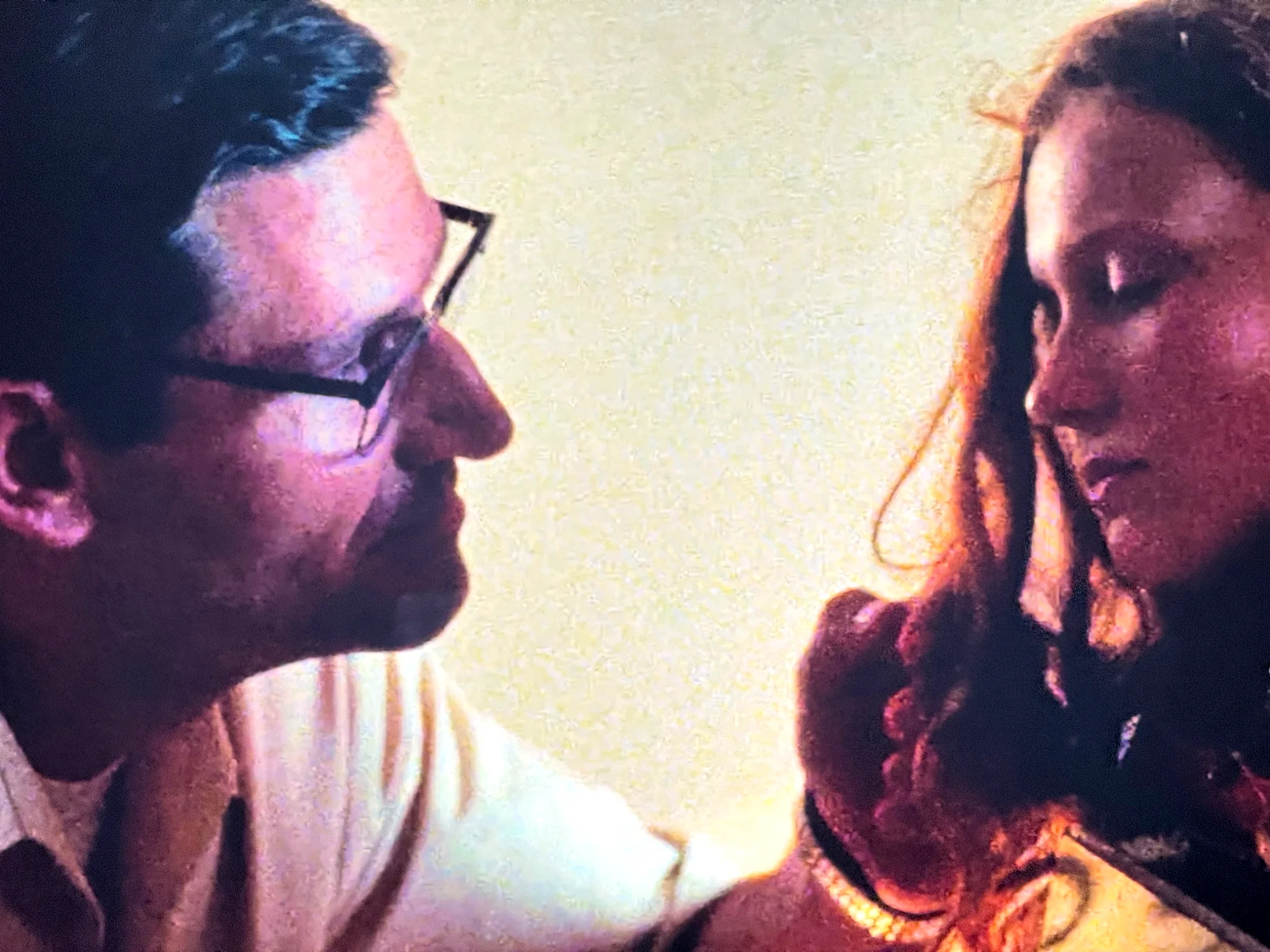
A sporadic and filtered intro, with a fragmented memory montage, sets up the history. The absolute heaviest of subjects. A sexually abusive father, controlling, violent and oppressive.
These montages never cease.
One sister runs away. Our protagonist, Lidia, can swim, and finds her freedom with a university scholarship.
But Lidia's personal histories will plague her wherever she goes. Drugs and alcohol, rage and insecurity lead our poor swimmer down a predetermined path.
She escapes her inflicted horror only to find and dwell in a maybe lesser one. It’s about constantly searching for escape and finding dead ends.
We dive deeper into the father’s sins and his constant reemergence sets an unsettling tone.
Every scene is constructed to maximize your discomfort.
Lidia is a human that feels deeply, but is an exposed nerve.
In act two, cue the scene for Ken Kesey, played by Jim Belushi, who reads Lidia’s trauma like an article.
“Before my father was my father, he was beautiful”
There is a strong sense that Lidia is never safe. Kesey is a father figure, and in this film father’s are monsters, and maybe unfairly, maybe not, our fears never abate.
But act two is brief, and Lidia continues into act three, a woman severed from her past, ventures toward her future in act four.
"Fathers are often uncontainable while the little women swam for their lives."
This film has so many subjective flash scenes that the constant disorientation is clearly meant to reflect a portrait of Lidia's turmoil. She cannot escape the trauma. In this sense, the water both cleanses and fills all cracks and crevices.
"You can tell a lot about a person by seeing them in the water"
The catharsis of this movie comes when she confesses to a student, very plainly, that "My father was abusive." In a movie where the dialogue and writing is of such a strong ethereal and poetic nature, the straight bluntness of this exchange is a pace distortion that creates an almost perfect resolution.
"How so?" says the student
"Sexual" answers Lidia
"That sucks!" -- such perfect ironic simplicity
Kristen Stewart, her directorial debut, orchestrates this exchange perfectly. Surrounded by movie creation for decades, I suppose this skillful flourish shouldn't be that surprising, but I'm amazed anyway.
"I'm not speaking out of my asshole when I say this, but come in, the water will hold you"
The Chronology of Water is a near perfect movie but many audiences will likely struggle. But if Stewart follows this up with something of similar quality, in the next decade we all may label her an auteur and place her on a pedestal.